Introducing Automated Schedules: Detected, Posted, Reconciled — Inside The Ledger

Supporting schedules are the most persistent workflow still living outside the ledger.
For as long as accrual accounting has existed, tracking fixed assets, prepaid expenses, amortization, and manually-calculated journal entries has been relegated to schedules managed in external spreadsheets. Traditionally, the ledger records what happened while the schedule determines why and what happens next.
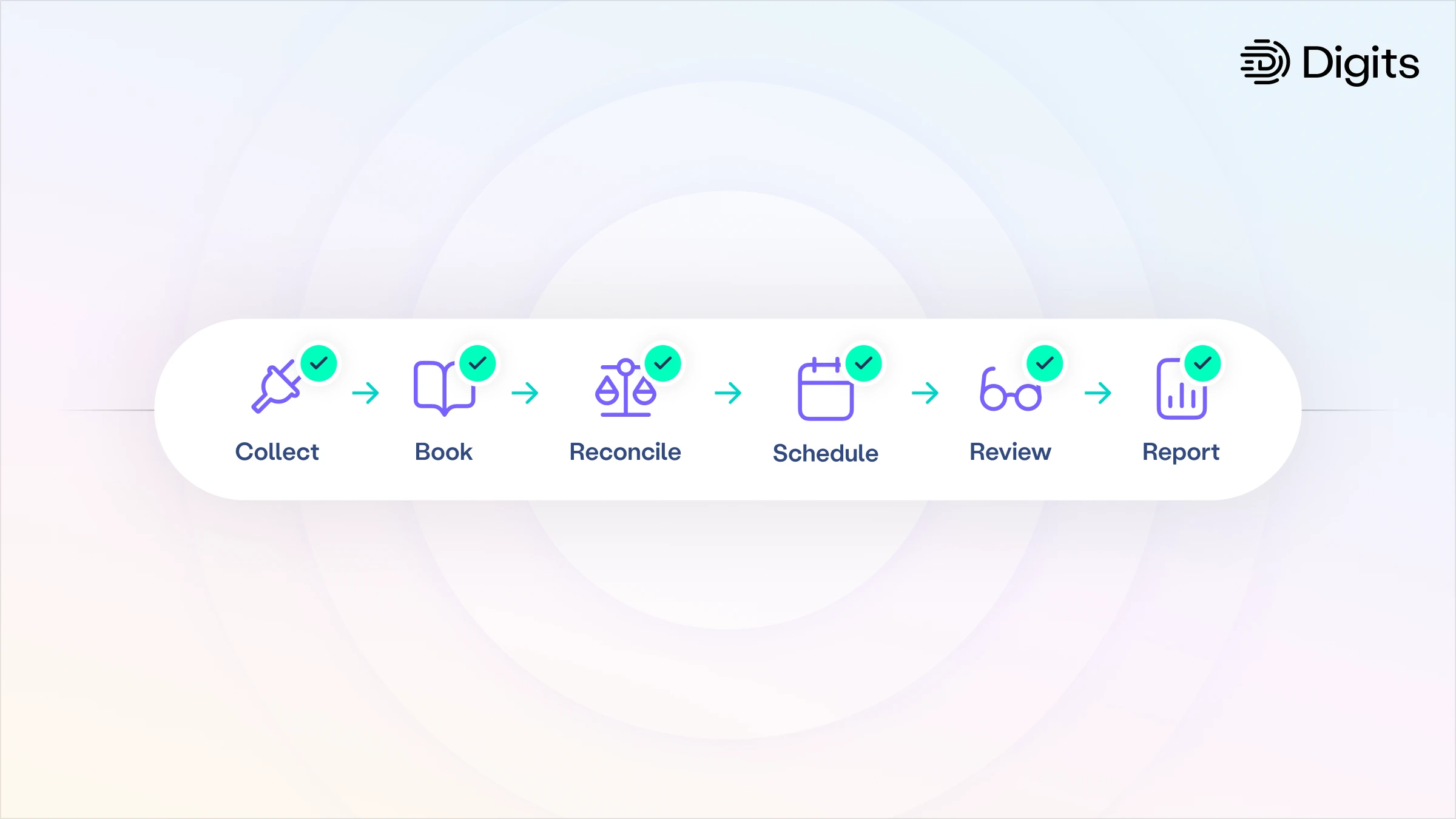
Every close cycle, your team rolls schedules forward, recalculates amortization, creates journal entries by hand, and reconciles everything back to the books. There’s little complex judgment involved. Just time, risk, and repetition every single month.
Today, Digits Schedules is where that process ends.
The ledger finds the schedules. You make the calls
Other systems try to solve this by adding a module or a recurring journal entry feature, but the workflow doesn’t change. Accountants still identify transactions, decide what needs a schedule, calculate entries, and manage everything manually.
Digits takes a different approach. Instead of waiting for you to initiate a schedule, the ledger identifies transactions that need one.
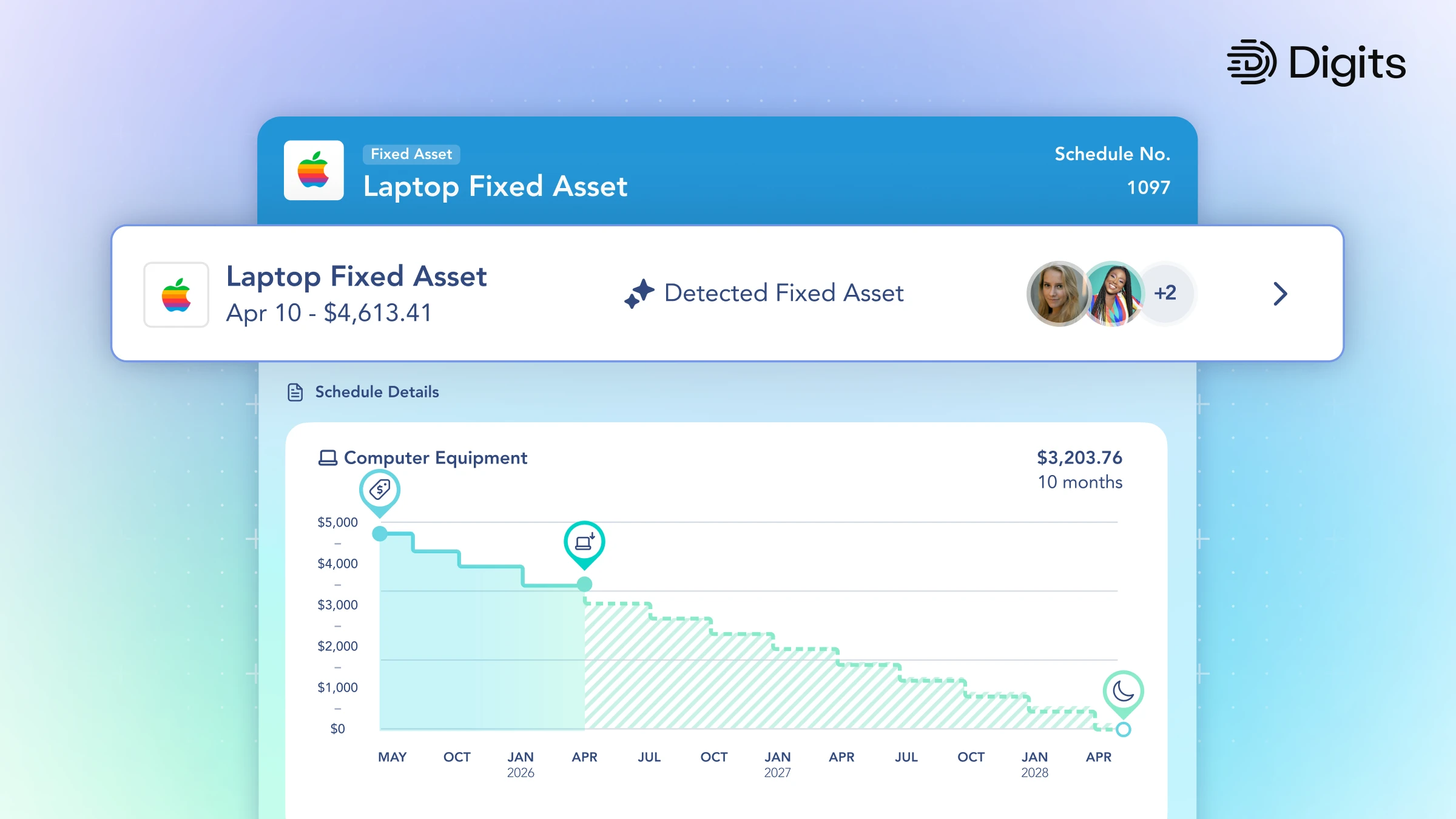
A $2,500 equipment purchase hits the books. Digits flags it as a likely fixed asset, drafts a depreciation schedule using transaction context, and surfaces it in your Checklist. You confirm the useful life, verify accounts, and finalize. From there, journal entries are generated automatically every period, for the life of the asset.
The same applies to prepaid expenses: subscriptions, insurance, and rent. Detected, scheduled, and posted, all without a spreadsheet.
Nothing posts without your approval. Every proposed schedule includes assumptions and projected entries, so you can review the full picture before anything posts. Adjust it, approve it, or dismiss it. The system handles the math. You retain the judgment.
From spreadsheets to systems of record
Revenue recognition is a clear example. It’s high volume, highly visible, and often fragmented across spreadsheets – upfront fees, subscriptions, usage – all manually stitched together and loosely tied to the ledger.
Accrued expenses are even more disconnected. Often there’s no transaction, just the knowledge that work was done. Contractors bill later. Payroll is earned before it’s paid. These require manual tracking, manual entries, and later reconciliation.
These aren’t edge cases. They’re the core of accrual accounting and yet they still rely on disconnected spreadsheets, manual tracking, and human memory.
Digits Schedules brings these workflows into the ledger, turning transactions, contracts, and context into structured, reviewable schedules.
The work is done where it belongs.
Built into the ledger. Not bolted on
When schedules live outside the ledger – in a spreadsheet, a bolt-on tool, or a module that syncs back to the GL – reconciliation gaps are inevitable. The workbook says one thing. The ledger says another.
In Digits, schedules are native to the general ledger. Every schedule traces from the source transaction through each posted journal entry to the balance sheet.
Craig Walker, Head of Product Strategy at Digits and former Co-Founder & CTO at Xero put it simply:
"QuickBooks can't do this. Xero can't do this. Even mid-market ERPs sell it as a separate product that takes months to implement before the first journal posts. Digits just made it the default behavior of the general ledger."
What’s next
We’re starting with fixed assets and prepaid expenses, the schedules every firm touches every month.
Automated revenue recognition is coming shortly, along with built-in support for additional accrual workflows like accrued expenses. Our goal is to bring every schedule into the ledger and eliminate spreadsheets and manual journal entries entirely.
Digits Schedules are now available for accounting firms on Digits for Firms plans. Speak with our team to automate your accrual workflows inside the ledger with Digits.
Connect with Digits
Jeff Seibert
Co-Founder & CEO
@jeffseibert
Jeff Seibert is the founder and CEO of Digits, the world's first AI-native accounting platform. He previously served as Twitter's Head of Consumer Product and starred in the Emmy Award-winning Netflix documentary The Social Dilemma.
Jeff was co-founder and CEO of the mobile performance analytics company Crashlytics, which was acquired by Twitter in 2013. Now owned by Google, Crashlytics runs on over 6 Billion monthly-active smartphones and is the market-leading crash reporter for both iOS and Android.
A self-taught programmer, Seibert released his first app at the age of 13 and went on to graduate from Stanford with a B.S. in Computer Science. He's angel-invested in almost 100 startups and was named one of Insider's Top 100 Seed VCs in 2021.


Stay up to date with Digits
Unsubscribe anytime.